Whether Japan’s eVISA system can fully replace the traditional visa is a common question among travelers planning a trip to Japan. Although they hold equal legal value, these two visa types are designed for different purposes and target groups. In this article, Global eVisa will clarify the concept of Japan eVISA and compare it with the traditional visa, helping to accurately identify the right visa type for specific needs.
Defining Japan eVISA and Traditional Visa
What is Japan eVISA?
The Japan eVISA is an electronic visa system administered by the Ministry of Foreign Affairs of Japan. It allows eligible applicants to complete the entire visa process online, including application submission, document upload, payment, and receipt of the visa outcome.
- Format: No physical visa label is issued. Instead, applicants receive a Visa Issuance Notice electronically, which is linked to the applicant’s passport.
- Scope of use: Currently limited to short-term stays of up to 90 days for tourism purposes only, and is issued as a single-entry visa.
- Eligibility requirements: Available to residents of selected countries using a valid ordinary passport. Entry is permitted via international air travel or designated international ferry routes.
What is a Traditional Japan Visa?
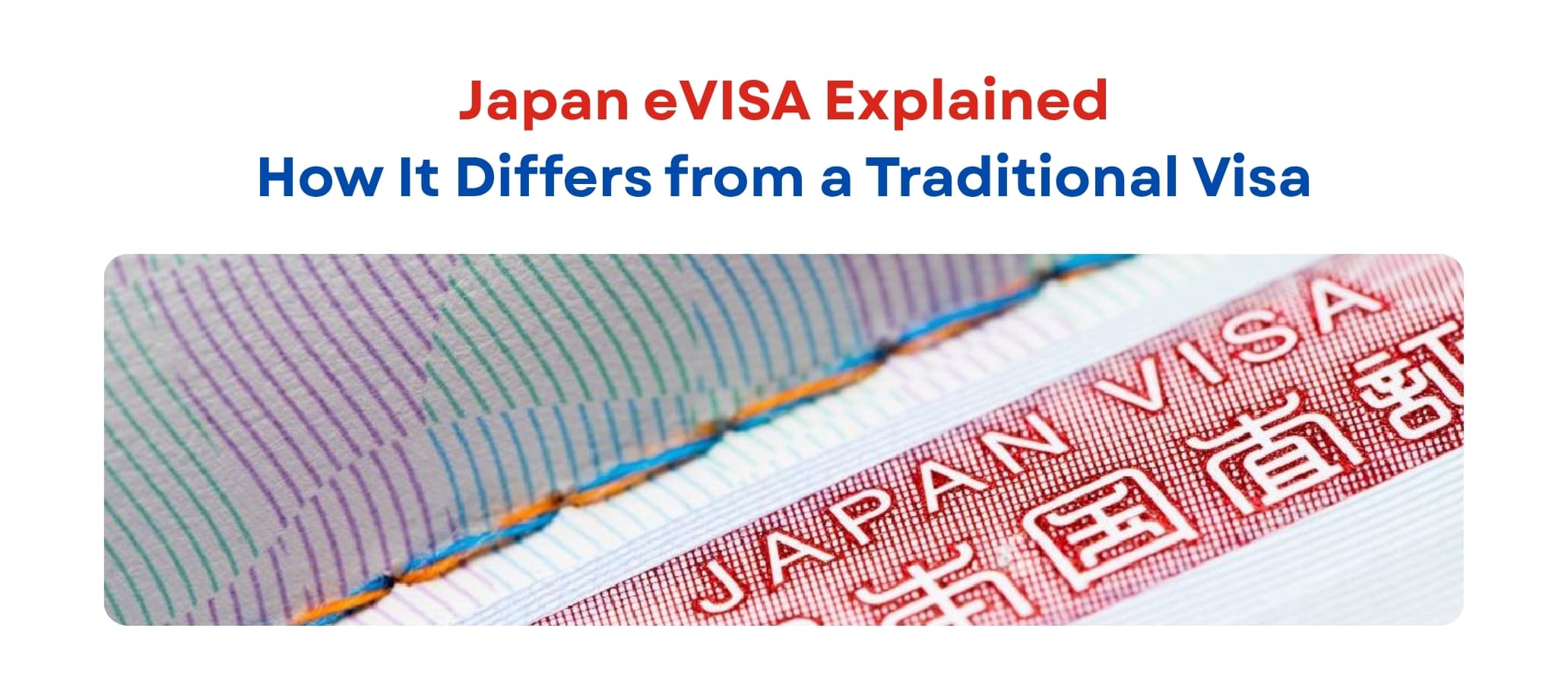
A traditional Japan visa is a physical visa issued as a sticker affixed to the applicant’s passport. Applications are submitted through Japanese Embassies, Consulates, or authorized visa application centers.
This visa category is required for all travel purposes not covered under the eVISA system, including but not limited to business travel, visiting family or friends, study, employment, transit, and multiple-entry visa applications.
General Comparison: Japan eVISA vs. Traditional Visa
Before applying, it is important to understand the key differences between the two visa types.
|
Criteria |
Japan eVISA |
Traditional Visa |
|
Application Method |
100% Online |
In-person submission via Embassy/Consulate or authorized agency |
|
Eligible applicants |
Residents of designated eligible countries |
All nationalities, including those not eligible for eVISA |
|
Purpose of Entry |
Short-term tourism (up to 90 days) |
Tourism, business, visiting relatives, study, work, transit, and other long-term purposes |
|
Processing Time |
Typically at least 7 business days from submission |
Varies depending on consular workload; may take longer |
|
Entry Type |
Single-entry only |
Single or multiple entries, depending on visa type |
|
Passport Requirement |
No physical passport submission required (scanned copy only) |
Original passport submission required |
|
Visa Issuance Format |
Electronic Visa Issuance Notice |
Physical visa sticker affixed to the passport |
eVISA vs. Traditional Visa: Which Choice Is Right for You?
When to Choose eVISA?
The Japan eVISA may be appropriate if you:
- Hold citizenship or residency in a country eligible for Japan’s eVISA program
- Are traveling for short-term tourism purposes only
- Are not engaging in business, employment, study, or family visitation activities
- Are unable or prefer not to submit an in-person application due to location or time constraints
- Meet all standard documentation requirements without the need for additional explanation
- Will enter Japan via approved international air or ferry routes (land entry is not supported under the eVISA system)
When to Choose a Traditional Visa?
A traditional visa is required or more appropriate if you:
- Are not eligible for the eVISA program based on nationality or residency
- Intend to travel for purposes such as business, visiting relatives, study, employment, or transit
- Require a multiple-entry visa or extended stay beyond the eVISA limitations
- Have a complex application requiring supporting documentation or explanation
- Hold diplomatic or official passports
Conclusion
The Japan eVISA and traditional visa systems are complementary mechanisms designed to serve different categories of travelers. The eVISA streamlines the application process for eligible short-term tourism visits through a fully digital platform, while the traditional visa remains necessary for a broader range of travel purposes and longer-term stays. Selecting the correct visa category at the outset is essential to ensure compliance with entry requirements, avoid processing delays, and facilitate a smooth and efficient application process.
If you are eligible for a Japan eVISA, Global eVisa can support you throughout the application process—from document review to submission. Our team helps ensure your application is complete, accurate, and aligned with current requirements. Contact us to streamline your eVISA process and minimize the risk of delays.