

A visa is not the final step. Whether you can enter Turkey depends on what you present at the airport or border, not just what you received in advance. Most trips go smoothly when everything is clear from the beginning. But when something does not align, even in a small detail, you may need to pause, explain, or adjust your plans on the spot. Understanding entry requirements is not something to check at the end. It is what ensures your entire plan works as expected.
Turkey entry requirements you must meet
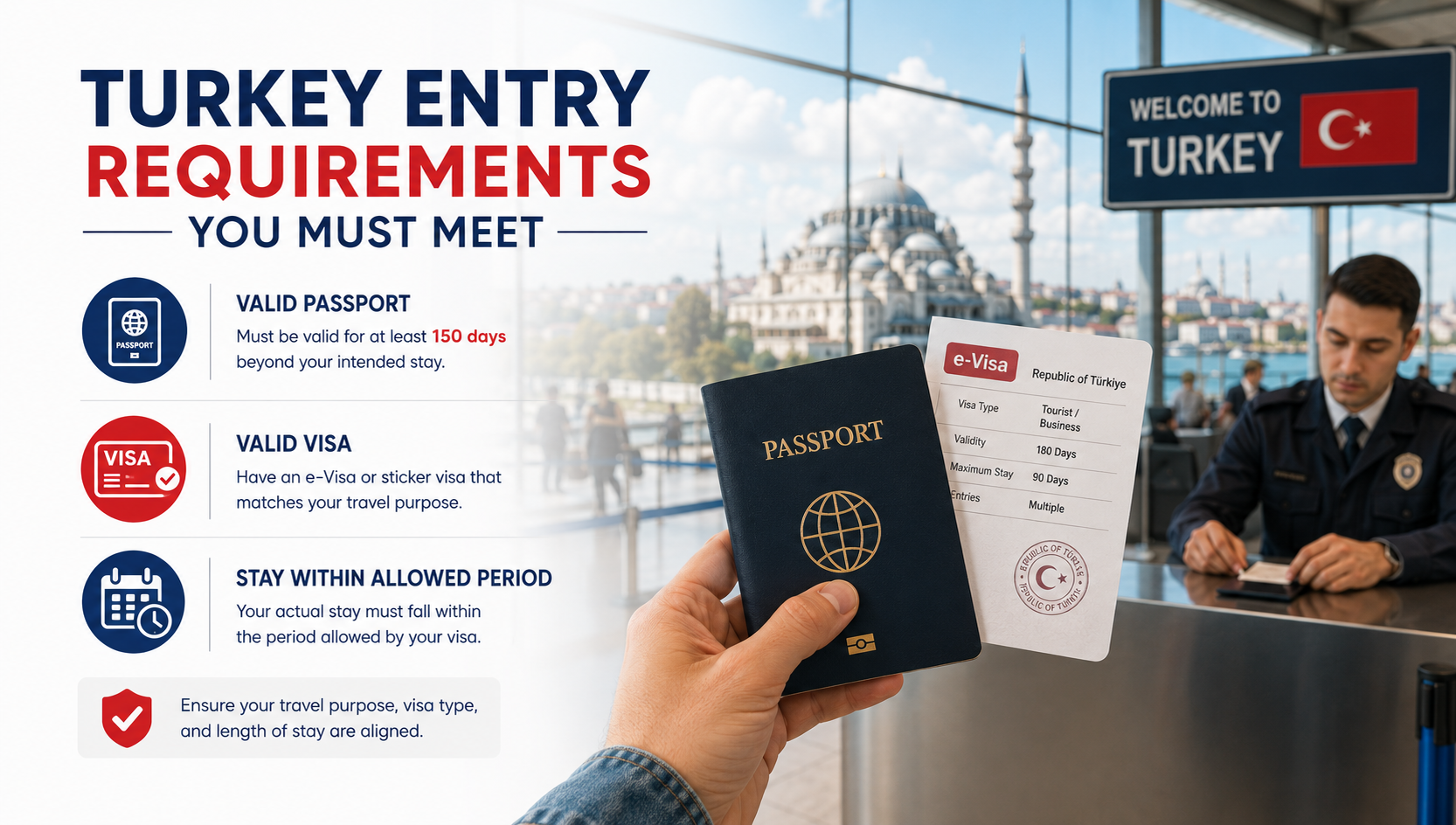
When you arrive in Turkey, the process is generally straightforward. Still, there are a few core requirements that are always checked.
First is your passport. It must be valid for long enough beyond your intended stay, not simply “not expired.” This is a technical requirement, but if it is not met, you may not be allowed to continue your journey. Next is your visa. Depending on your case, this could be an e-Visa or a sticker visa. The key point is not just having a visa, but having one that matches your travel purpose and length of stay. Your actual stay must also fall within the period allowed by your visa. If your plan does not align with your visa type, you may be asked to clarify.
Documents you may need upon entry
Not every traveler is checked in the same way. However, in some cases, you may be asked to provide additional details to support your trip. This can include a return or onward ticket, proof of accommodation, or basic travel plans. These are not required in every situation, but if asked, you should be able to present them.
You may also be expected to show that your trip is financially reasonable. This does not mean preparing full financial documents as in a visa application, but your plan should make sense.
The important point is that these details do not stand alone. They need to align with each other and with the visa you are using.
When entry checks become more detailed
In most cases, entry is quick and straightforward. But certain situations may lead to closer review. For example, when your itinerary is unclear or does not match your intended stay. Or when your stated travel purpose is not clearly reflected in your plans.
You may also be asked more questions if you enter multiple times within a short period or if your travel pattern changes from previous visits. This does not mean there is a problem. It simply means you may need to explain your situation more clearly at the point of entry.
If entry requirements are not met
If something does not align, you may be asked to provide more information or clarify your situation. In many cases, this can be resolved on the spot. But if the details are unclear or inconsistent, your plan may be disrupted or may not proceed as expected. Most of these situations do not come from major issues, but from small details that were not prepared in advance.
How to prepare before your flight
To make the entry smooth, you do not need to prepare more; you just need to prepare correctly.
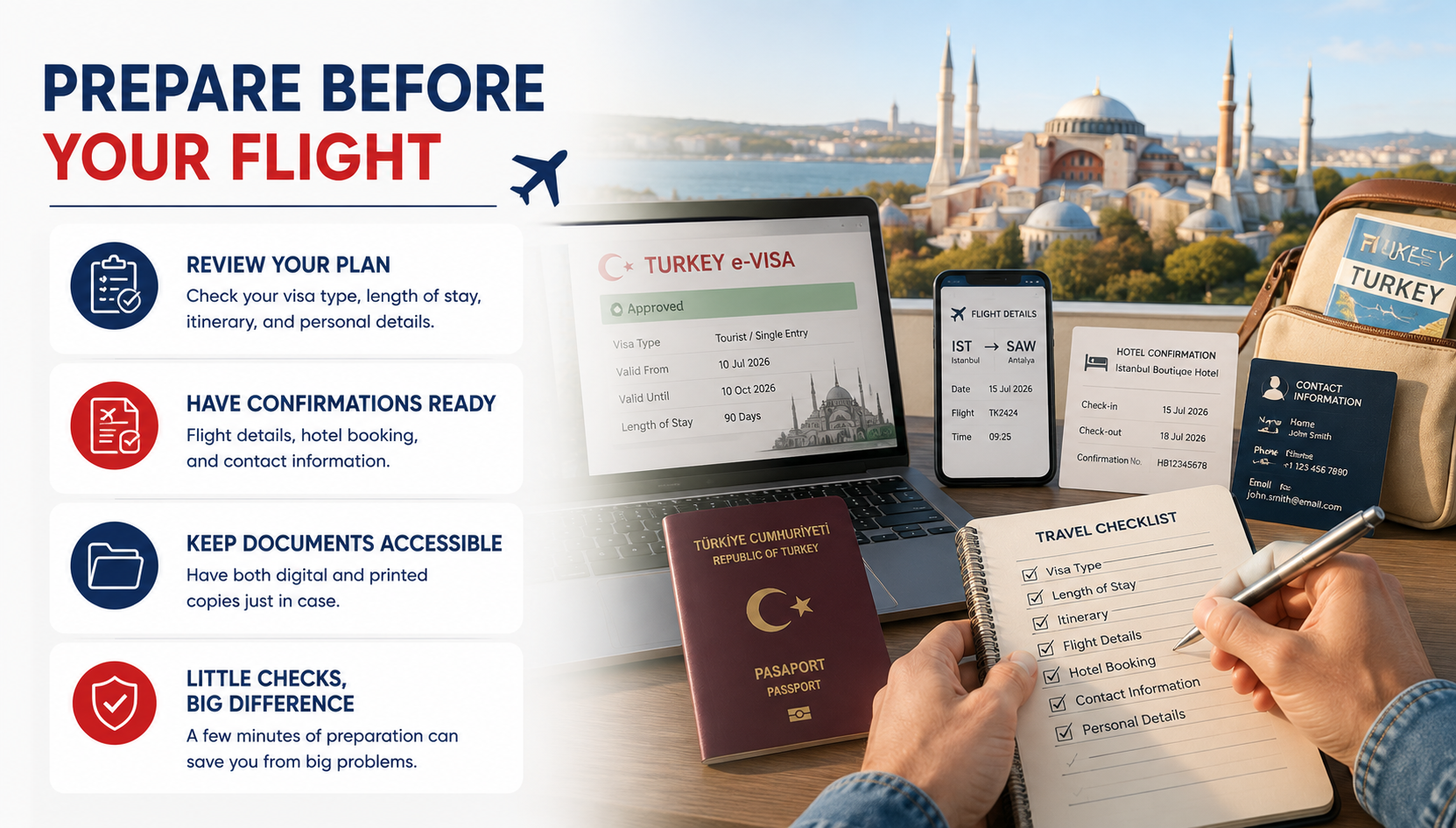
Before you travel, review your entire plan: your visa type, length of stay, itinerary, and personal details. Make sure they all align.
If needed, have basic confirmations ready, such as your flight details, accommodation, or contact information, in case you are asked.
These checks take little time but significantly reduce the risk of issues at the airport.
Entry starts before you arrive
Entry is not a separate step. It is the continuation of everything you prepared beforehand.
When your information is clear and consistent from the beginning, the airport process is usually quick and uneventful. If something is not fully prepared, you may need to adjust at the least convenient moment.
Understanding and preparing for entry requirements does not just help you get through immigration; it also helps you get through the rest of your trip. It helps ensure your trip starts exactly as planned.


