

Uzbekistan is one of Central Asia’s most rewarding destinations for travelers who want history, architecture, culture, and Silk Road heritage in one journey. From the tiled monuments of Samarkand to the old cities of Bukhara and Khiva, each destination tells a different part of the country’s story. This guide highlights five essential places to visit in Uzbekistan for travelers planning their first trip.
1. Tashkent
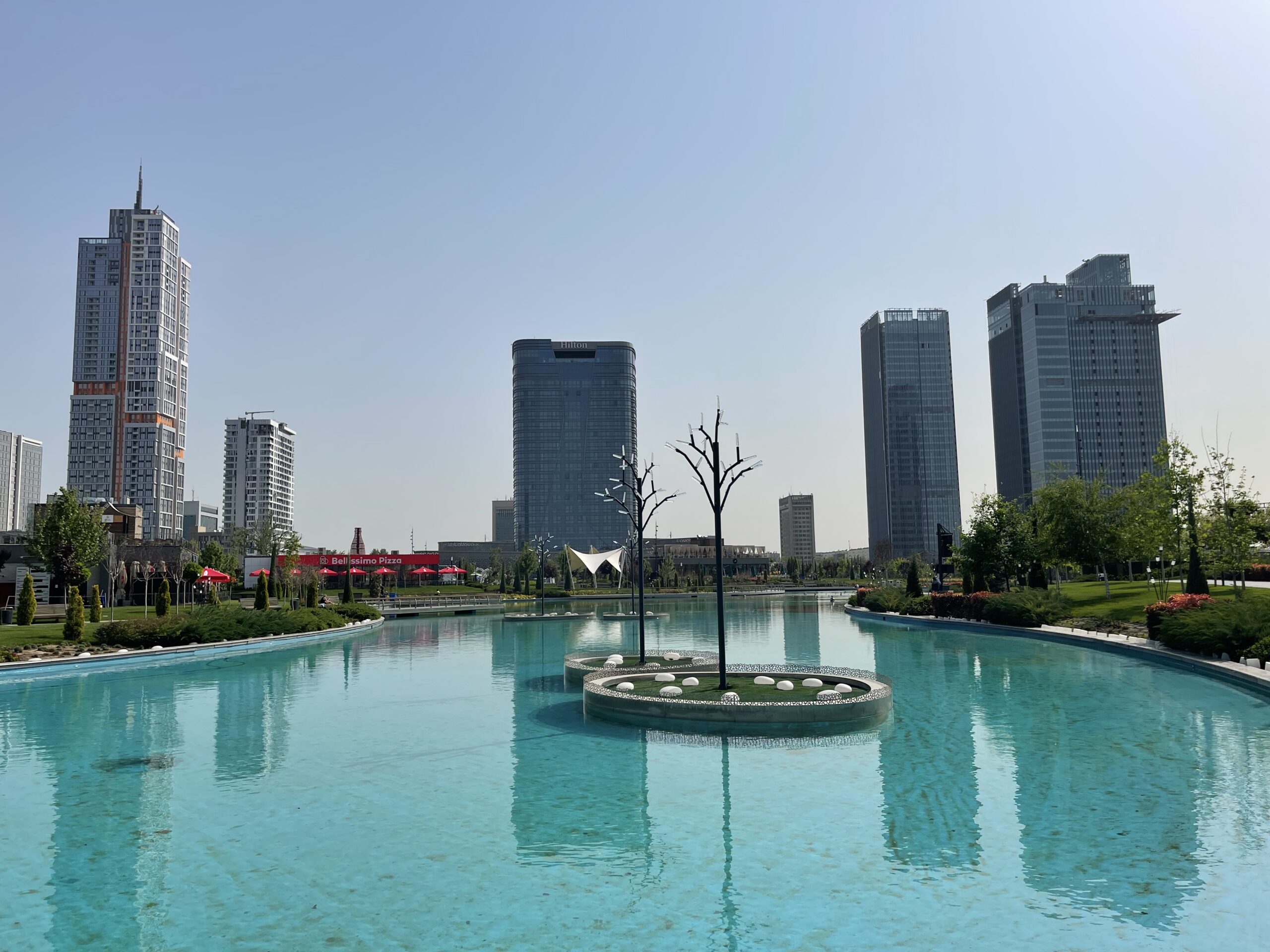
Tashkent is often the first point of arrival for international travelers, and it makes a practical introduction to Uzbekistan. As the capital city, Tashkent combines modern infrastructure, Soviet-era urban planning, green boulevards, museums, markets, and a growing hospitality scene.
For first-time visitors, Tashkent is useful because it helps travelers adjust before moving deeper into the country’s historic Silk Road cities. The city is easier to navigate than many expect, with broad roads, metro stations, hotels, restaurants, and transport connections to other regions.
One of the most interesting ways to experience Tashkent is through its contrast. On one side, travelers can explore traditional markets such as Chorsu Bazaar, where local food, spices, dried fruits, bread, and daily life are easy to observe. On the other side, the city has formal squares, government buildings, museums, and a more contemporary rhythm.
Tashkent is also a good place for travelers who want to understand modern Uzbekistan before visiting older cities such as Samarkand, Bukhara, and Khiva. It is less about one single monument and more about the country’s current pace of life.
For business travelers and founders, Tashkent is especially relevant. It is the country’s administrative and commercial center, making it a common base for meetings, conferences, investment trips, and regional planning. Travelers can also use Tashkent as a transport hub before continuing by train or domestic flight.
A short stay of one or two days is usually enough for a first visit, but skipping Tashkent entirely may mean missing an important layer of the country. It is the place where Uzbekistan’s past and present sit side by side.
2. Samarkand
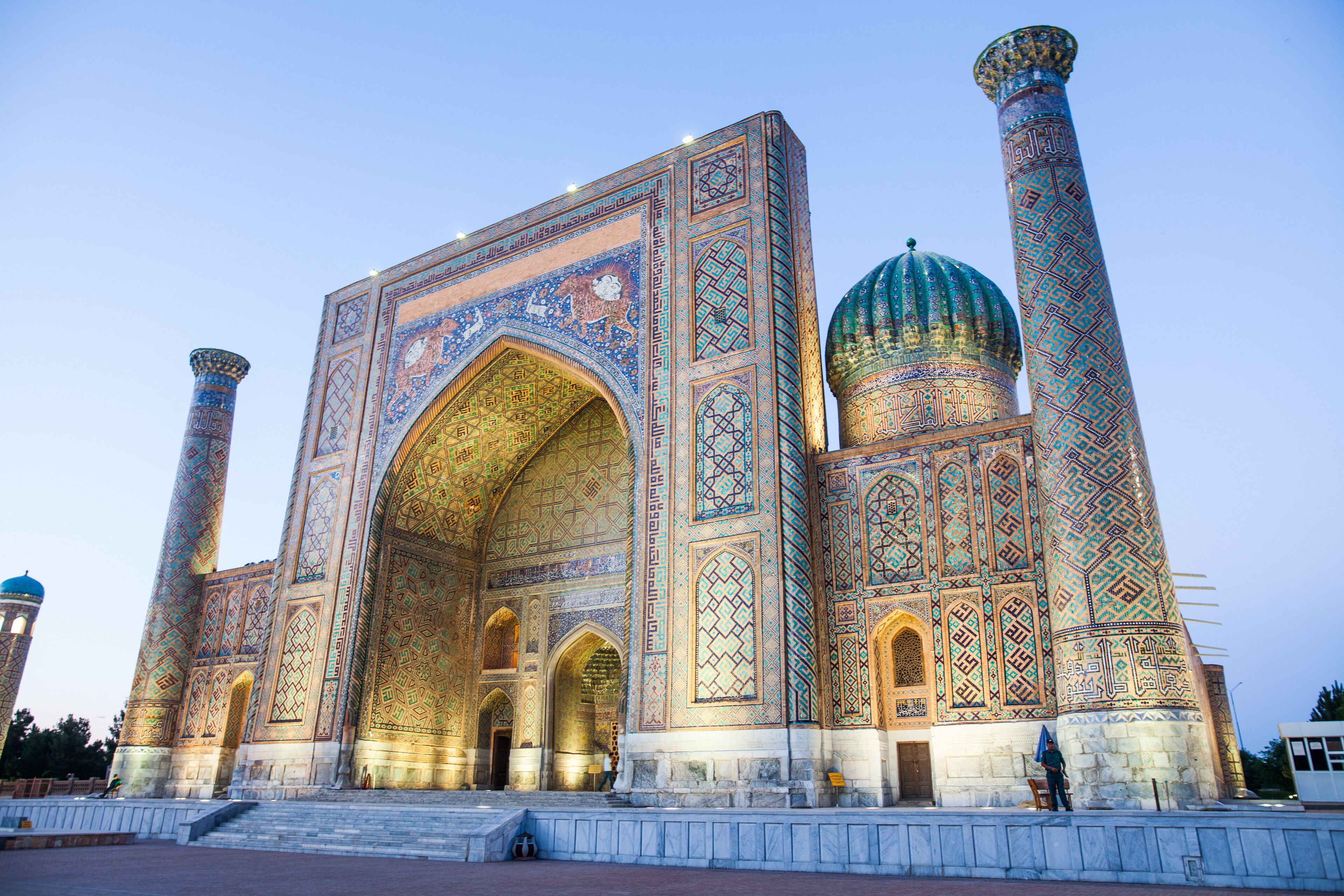
Samarkand is the city most closely associated with Uzbekistan’s Silk Road image. For many first-time travelers, it is the main reason to visit the country. The city is known for grand architecture, blue-tiled domes, historic madrasahs, mausoleums, and the feeling of walking through a place that once stood at the heart of major trade and cultural routes.
The most iconic site in Samarkand is Registan Square. Surrounded by three grand madrasahs, the square is one of the most recognizable architectural ensembles in Central Asia. It is impressive not only because of its scale, but also because of the detail in its tilework, symmetry, and visual presence.
Samarkand works well for first-time travelers because it delivers a strong visual and historical experience without requiring a very long stay. A visitor can spend two days exploring the major landmarks and still leave with a powerful impression of the city.
Beyond Registan, travelers may visit mausoleums, mosques, markets, and historical sites connected to the Timurid period. The city also has a growing tourism infrastructure, with hotels, restaurants, guides, and transport links that make it easier to include in a classic Uzbekistan itinerary.
Samarkand is also well connected by rail, especially from Tashkent and onward to Bukhara. This makes it one of the most practical stops for travelers who want a structured route through Uzbekistan.
For travelers who care about architecture, photography, history, or cultural identity, Samarkand is essential. It is not simply a stop on the itinerary; it is often the emotional centerpiece of a first trip to Uzbekistan.
3. Bukhara
Bukhara offers a different atmosphere from Samarkand. If Samarkand feels grand and monumental, Bukhara feels more intimate, walkable, and deeply layered. The historic center is one of the best places in Uzbekistan to slow down and experience the rhythm of an old Silk Road city.
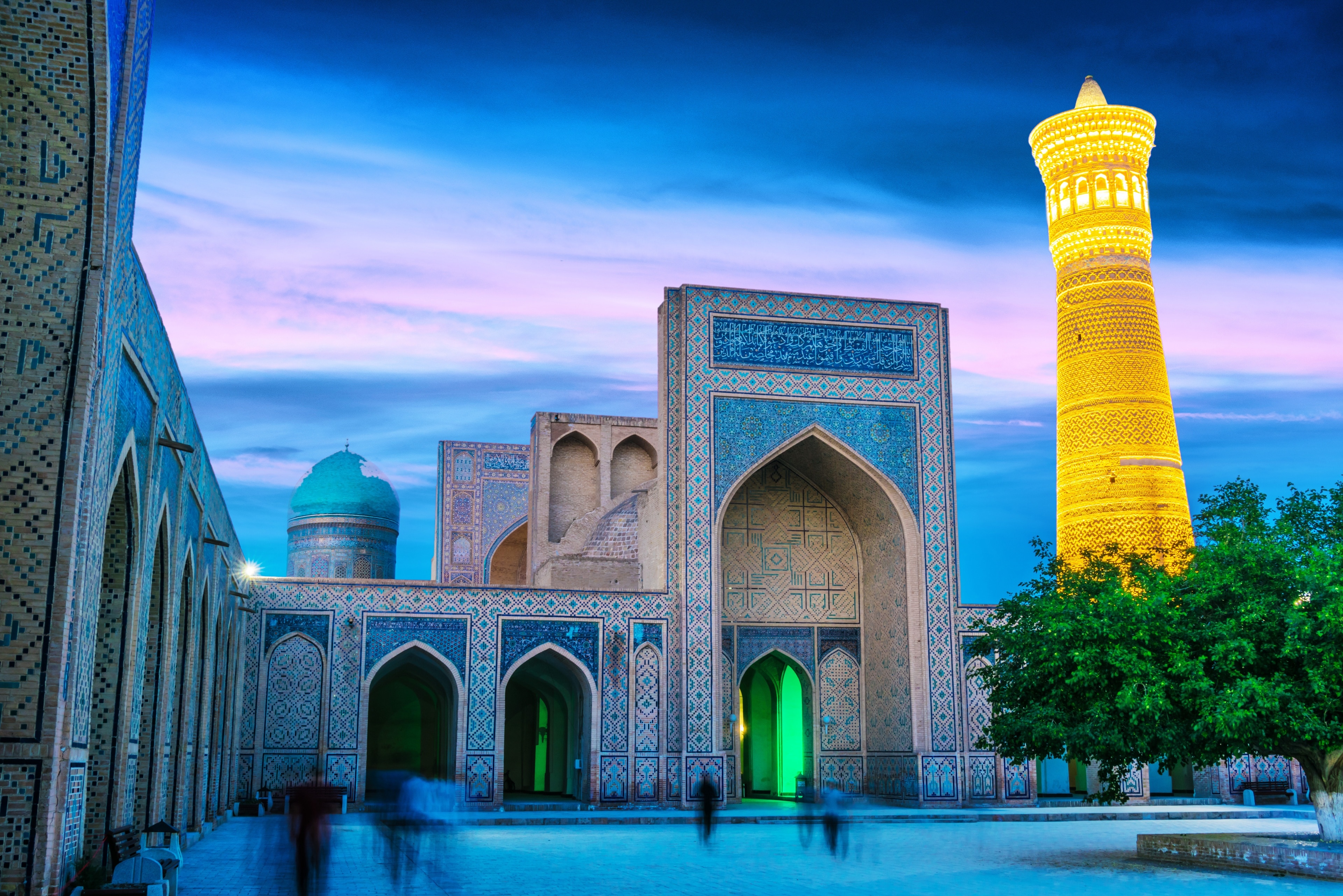
Bukhara is known for its preserved Islamic architecture, madrasahs, mosques, minarets, trading domes, courtyards, and narrow streets. The city has long been associated with scholarship, trade, religion, and craftsmanship. For travelers who enjoy heritage destinations with a strong sense of place, Bukhara is one of Uzbekistan’s most rewarding stops.
One of the advantages of Bukhara is that much of the historic experience can be explored on foot. Travelers can walk between monuments, teahouses, small shops, artisan workshops, and old streets without feeling rushed. This gives the city a more relaxed travel style compared with larger urban destinations.
Bukhara is also a good place to engage with local crafts. Textiles, ceramics, carpets, metalwork, and traditional design are part of the visitor experience. For travelers interested in culture beyond monuments, this makes Bukhara especially appealing.
A first-time traveler should consider spending at least two days in Bukhara. The city rewards slower exploration. It is not only about checking off famous sites, but also about sitting in a courtyard, walking through the old town at different times of day, and allowing the atmosphere to unfold.
Bukhara is best for travelers who want history, architecture, crafts, and a slower Silk Road experience. It adds depth and balance to an Uzbekistan itinerary.
4. Khiva
Khiva is one of the most distinctive destinations in Uzbekistan. Its historic walled inner city, Itchan Kala, gives travelers the feeling of stepping into a preserved Silk Road setting. For first-time visitors, Khiva is visually memorable, compact, and atmospheric.
The experience of Khiva is different from both Samarkand and Bukhara. Samarkand is grand, Bukhara is layered, and Khiva feels almost like an open-air museum. The old city walls, minarets, madrasahs, gates, and narrow lanes create a strong sense of enclosure and history.
Khiva is especially attractive for photographers and travelers who enjoy walking. The city’s scale makes it easy to explore on foot, and many of the most memorable moments come from wandering through the old streets, watching the light change over the walls, and seeing the city after the day-trippers have left.
Because Khiva is located farther west, it requires more planning than Tashkent, Samarkand, or Bukhara. Travelers often include it as part of a longer itinerary or reach it through Urgench. However, the extra planning is often worth it for those who want a more complete first trip.
Khiva also helps travelers understand the geographic and cultural range of Uzbekistan. It shows a more desert-edge atmosphere and offers a different visual language from the blue domes of Samarkand or the old trading routes of Bukhara.
For a first-time itinerary, Khiva is highly recommended if time allows. It may not be the easiest stop logistically, but it is one of the most memorable.

5. Fergana Valley
Fergana Valley offers another side of Uzbekistan. While many first-time itineraries focus on monuments and historic cities, the Fergana Valley introduces travelers to crafts, local life, agriculture, markets, and regional culture.
The valley is known for its fertile landscapes and long-standing craft traditions. Travelers may visit towns associated with ceramics, silk production, textiles, and local markets. This makes the region especially interesting for visitors who want to go beyond the classic Tashkent–Samarkand–Bukhara–Khiva route.
For travelers interested in human stories, Fergana Valley can be very rewarding. It offers a more grounded experience of Uzbekistan’s living culture. Instead of focusing mainly on grand monuments, visitors can learn about workshops, family businesses, food traditions, and everyday life.
The valley is also useful for repeat travelers or first-time visitors with more days available. If your itinerary is short, it may be difficult to include. But if you want a fuller view of Uzbekistan, Fergana Valley adds a valuable cultural dimension.
For business travelers and founders, the region can also be interesting because it reflects local production, craft industries, and regional economic life. It is not only a tourism stop, but also a place to understand how tradition and enterprise continue to connect.
Fergana Valley is best for travelers who want craft heritage, local markets, and a more people-centered travel experience.

Final Thoughts
Uzbekistan is an ideal destination for first-time travelers who want a journey built around history, culture, and Silk Road heritage. Tashkent provides a modern introduction, Samarkand delivers the country’s most iconic architecture, Bukhara offers a slower old-city atmosphere, Khiva creates a powerful walled-city experience, and Fergana Valley brings travelers closer to local crafts and daily life.
For a short first trip, Tashkent, Samarkand, and Bukhara form a strong foundation. If time allows, Khiva adds one of the country’s most memorable historic settings. For travelers who want a deeper cultural layer, Fergana Valley is worth considering.
Before departure, travelers should plan their route carefully, check seasonal conditions, and confirm visa or entry requirements based on nationality. A well-planned itinerary can turn Uzbekistan from a simple sightseeing trip into a thoughtful journey across one of Central Asia’s most fascinating destinations.
Ready to plan your Uzbekistan trip? Contact us now for Uzbekistan visa guidance and travel support.


