In recent years, South Korea has implemented an electronic entry system to simplify travel procedures for international visitors. However, many travelers still confuse ETA and eVisa—two systems that differ significantly in legal nature and application requirements. This article explains what an ETA for South Korea is and provides a clear comparison with eVisa to help you choose the right travel authorization for your trip.
What Is ETA for South Korea?
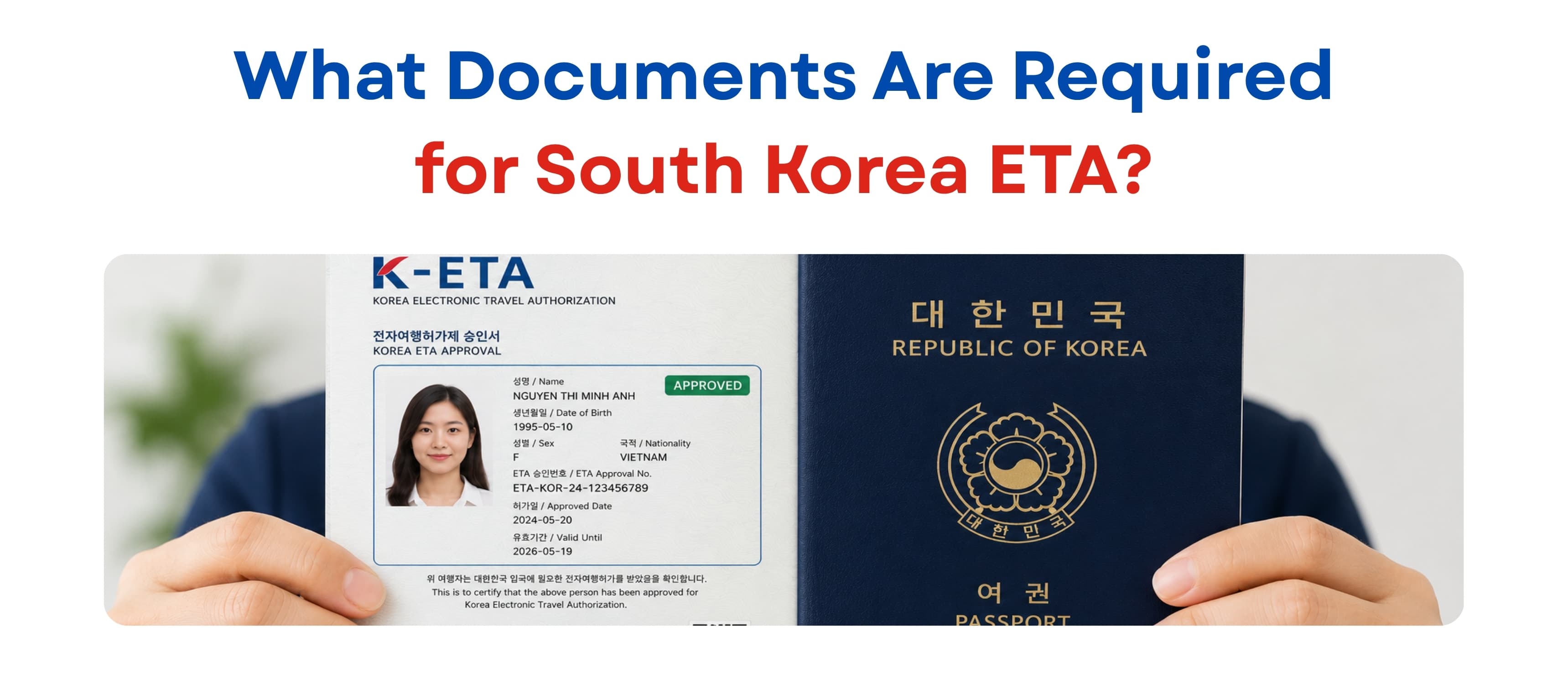
ETA (K-ETA – Korea Electronic Travel Authorization) is an electronic travel authorization required for travelers from visa-exempt countries entering South Korea.
It is important to understand that ETA is not a visa, but rather a pre-screening approval before travel. This means that even if your ETA is approved, the final decision on entry still lies with immigration officers at the port of entry.
ETA is primarily designed for short-term travel purposes such as tourism, business trips, or visiting family, and is currently the most widely used entry method for international travelers to South Korea.
What Is eVisa for South Korea?
Unlike ETA, an eVisa is an official electronic visa issued by South Korea’s immigration authorities, carrying full legal validity equivalent to a traditional visa sticker.
However, a key characteristic of South Korea’s eVisa system is that it typically requires sponsorship from a Korean organization, company, or authorized travel agency.
This requirement makes the eVisa process more complex and less accessible for independent travelers. eVisas are generally used for purposes such as study, employment, long-term stays, or specialized activities.
Quick Comparison: ETA vs eVisa
|
Criteria |
ETA |
eVisa |
|
Nature |
Entry authorization (not a visa) |
Official visa |
|
Legal status |
Does not guarantee entry |
Full legal validity |
|
Purpose |
Tourism, short-term business |
Broader (study, work, long-term stay) |
|
Application process |
Simple, fully online |
More complex, requires sponsorship |
|
Eligibility |
Visa-exempt nationals |
Applicants requiring a visa |
|
Popularity |
Widely used |
Limited, case-specific |
From this comparison, it is clear that ETA is suitable for most travelers due to its simplicity, while eVisa is reserved for specific cases with stricter requirements.
Key Features of South Korea ETA
Validity and Number of Entries
South Korea’s ETA is issued as a multiple-entry authorization valid for up to 3 years from the date of approval. This provides significant flexibility, especially for frequent travelers such as business professionals or repeat visitors.
However, it is important to distinguish between ETA validity and permitted length of stay. Even if your ETA remains valid, each entry must still comply with the immigration regulations regarding duration of stay.
Length of Stay
The maximum stay allowed per entry under ETA is typically up to 90 days, depending on the traveler’s nationality.
This makes ETA ideal for short-term visits, but not suitable for long-term residence or employment. Overstaying can result in penalties or restrictions on future entry to South Korea.
Permitted Travel Purposes
ETA is intended for non-income-generating activities, including tourism, visiting relatives, attending conferences, or short-term business trips.
Travelers are not allowed to engage in employment or any form of income-generating activity while using ETA. If your travel purpose falls outside these categories, you will need to apply for an appropriate visa such as an eVisa or traditional visa.
Cost
The cost of obtaining an ETA is relatively low compared to traditional visa options. The government fee is approximately 10,000 KRW (around 7–8 USD), excluding transaction fees.
It is important to note that this fee is non-refundable, even if the application is rejected. Therefore, ensuring accuracy in your application is essential from the beginning.
Eligibility and Important Considerations
To apply for ETA, travelers must be from visa-exempt countries and intend to visit South Korea for short-term purposes. Certain individuals, such as those who already hold a visa or residence permit, are exempt from ETA requirements.
There are also several important considerations:
-
If you renew or change your passport, you must apply for a new ETA
-
If your travel details change, you should update the system accordingly
-
All submitted information must be accurate and consistent
Although the process is fully online, the level of scrutiny remains high, requiring careful preparation and attention to detail.
Conclusion
ETA and eVisa represent two entirely different entry systems for South Korea. While ETA offers a fast, convenient, and accessible solution for most travelers, eVisa is designed for specific cases requiring more complex documentation and sponsorship. If you need assistance with your South Korea ETA application to ensure accuracy and efficiency, the expert team at Global eVisa is ready to support you throughout the entire process – from consultation to final submission. Contact us today to make your journey seamless and stress-free.