
Applying for a Vietnam eVisa is a relatively simple online process. However, the approval result depends significantly on how well the application documents are prepared. Even a small mistake, such as an unclear photo, information that does not match the passport, or selecting the wrong entry checkpoint, may cause the application to be rejected or require resubmission from the beginning.
Understanding this, today’s article from Global eVisa will help you clearly understand the general conditions and the required document checklist for applying for a Vietnam eVisa most conveniently.
General Conditions for Applying for a Vietnam eVisa
Before starting the application, you need to check several basic conditions to ensure that you are eligible to apply for a Vietnam eVisa.
-
Your passport must be valid for at least 6 months from the intended date of entry.
-
Your purpose of entry must be suitable for the eVisa category, including tourism, visiting relatives, business, or short-term commercial activities.
-
You must enter through one of the airports or international border checkpoints permitted for eVisa entry.
-
You must not be subject to an entry ban or temporary suspension from being granted a visa to Vietnam.
-
You must have a valid email address to receive notifications and the eVisa result.
-
You must have a valid international payment method, such as Visa, Mastercard, or an equivalent card.
Checklist of Documents to Prepare When Applying for a Vietnam eVisa
The eVisa application is not too complicated. However, each document must meet the correct requirements in terms of information, format, and image quality. Below are the items you should prepare before submitting the application.
Valid Passport
A passport is the most important document in a Vietnam eVisa application. You need to ensure that your passport is valid for at least 6 months from the intended date of entry into Vietnam, not from the date of application submission.
In addition, the passport should have at least one blank page for the entry stamp at the border checkpoint. If the passport has expired, is torn, has unclear information, or is damaged, the application may be at risk of rejection.
Photo or Scan of the Passport Information Page
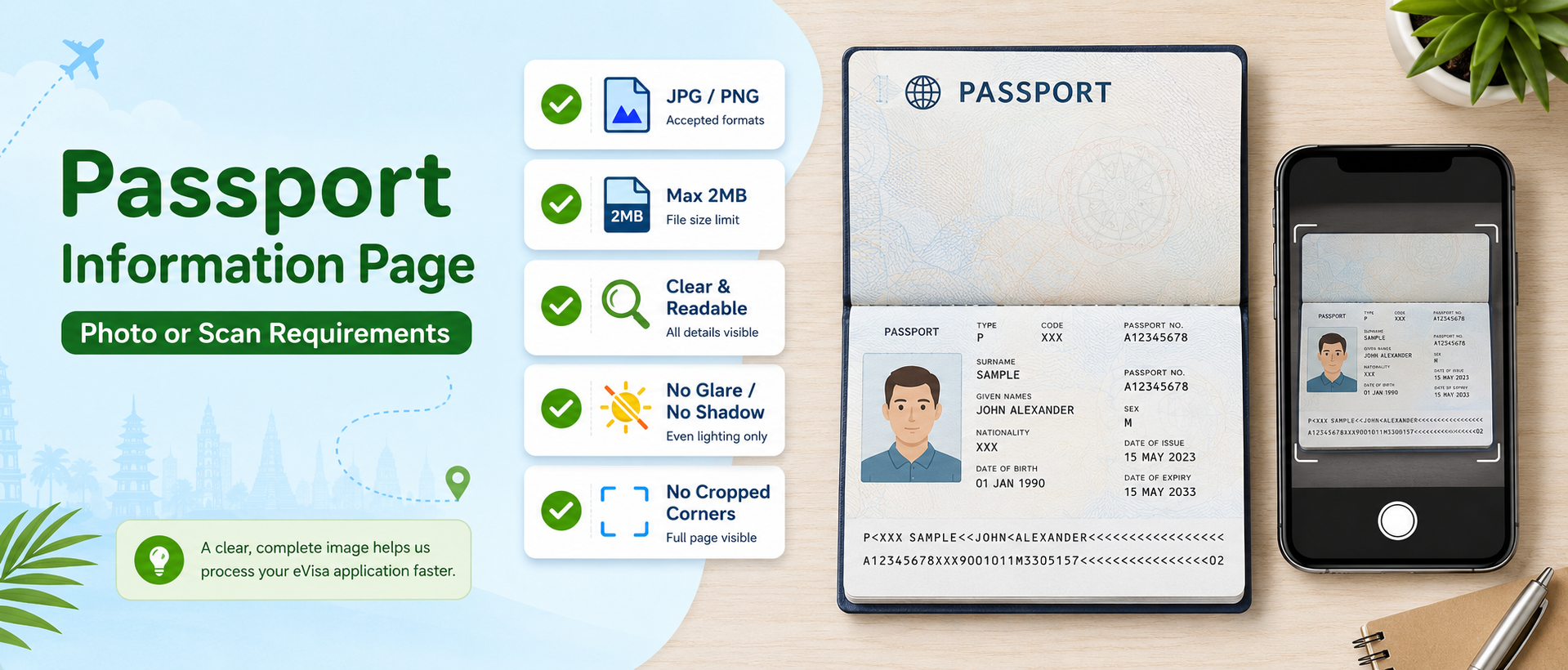
You need to upload a photo or scanned copy of the personal information page in your passport. This is the page that contains the portrait photo, full name, date of birth, nationality, passport number, and expiry date.
Basic requirements include:
-
File format: JPG or PNG.
-
File size: no more than 2MB.
-
The image must be clear, not blurry or affected by glare.
-
The image must not be cropped at the corners, cover any information, or contain shadows.
-
All content on the passport page must be clearly readable.
To reduce errors, you should place the passport on a flat surface, ensure sufficient lighting, and take the photo directly from above. You should not use flash if the reflected light makes the information on the passport unclear.

Portrait Photo
The portrait photo is one of the common reasons why eVisa applications are returned. Therefore, you need to prepare a photo that meets the requirements from the beginning.
The photo must meet the following criteria:
-
The applicant must face forward and look directly at the camera.
-
The background must be white or a plain light-colored background.
-
The face must be clear and not covered.
-
Do not wear a hat, sunglasses, or accessories that cover the face.
-
The photo must be taken within the last 6 months.
-
File format must be JPG or PNG, with a file size of no more than 2MB.
You should not use selfies, filtered photos, photos taken from printed images, or photos that have been stretched out of proportion. These errors can easily cause the system or reviewing authority to consider the photo non-compliant.
Travel Information
When filling out the eVisa application form, you need to provide basic information about your itinerary in Vietnam. This information should be prepared in advance to avoid incorrect entries during the application process.
The required items include:
-
Intended date of entry.
-
Intended date of exit.
-
Entry checkpoint.
-
Exit checkpoint.
-
Purpose of entry.
-
Expected length of stay in Vietnam.
If your itinerary is not fully fixed, you may enter the closest estimated dates. However, the eVisa is only valid within the approved period. You cannot enter Vietnam before the start date or stay after the expiry date stated on the visa.
Accommodation Address in Vietnam
Applicants for a Vietnam eVisa need to provide an accommodation address during their stay in Vietnam. This address may be a hotel, homestay, rented apartment, relative’s house, or business address if entering for business purposes.
The information should be provided as fully as possible, including the name of the accommodation or host, house number, street name, ward/commune, district, and province/city. If you have not made an official booking, you may use the address of the hotel you plan to stay at. However, you should complete the booking before entry to avoid potential issues at the border checkpoint.
eVisa Fee Payment Method
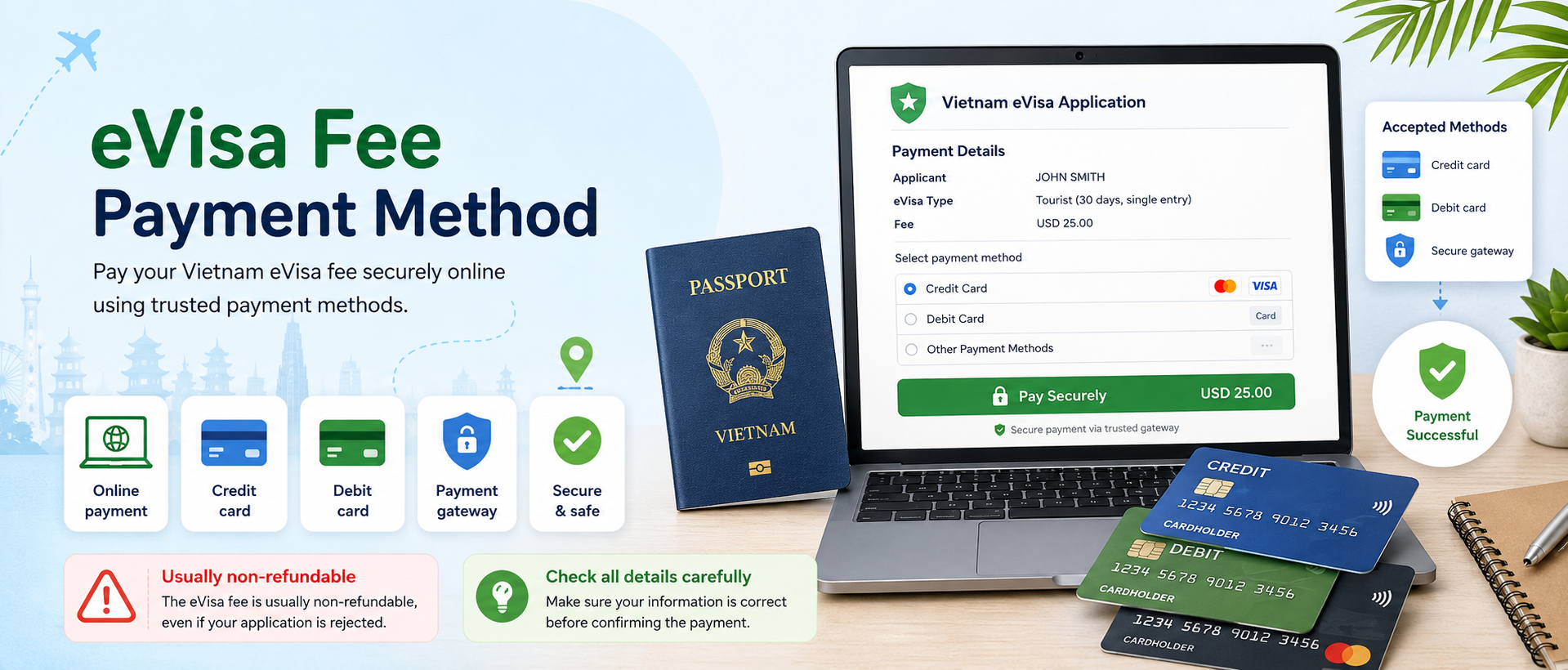
The Vietnam eVisa fee is paid online when submitting the application. You need to prepare a valid international card or payment method before starting the process.
Commonly used payment methods include:
-
International credit cards.
-
International debit cards.
-
Visa, Mastercard, JCB, or equivalent payment methods.
-
Some electronic payment gateways may be accepted depending on the time of application.
Please note that the eVisa fee is usually non-refundable, even if the application is rejected. Therefore, you should carefully check all information before confirming the payment and submitting the application.
Important Notes When Submitting an eVisa Application
In addition to preparing all required documents, applicants also need to carefully check the submission method and declared information to reduce the risk of rejection or prolonged processing time.
-
Submit through the official channel or a reputable service provider: You should submit the application through the official website of the Vietnam Immigration Department. If using an intermediary service, choose a reputable provider with clear information and a transparent process.
-
Carefully check the information on the form: Information such as full name, date of birth, passport number, nationality, and passport expiry date must match the passport exactly. Even a minor discrepancy may cause the application to be rejected.
-
Submit the application early before the entry date: You should submit the application at least 7 days before the intended date of entry. This timeframe allows you to be more proactive if you need to provide additional information, correct errors, or resubmit the application.
-
Save and print the eVisa after approval: After receiving the eVisa, download the file, save an electronic copy on your phone, and print an additional hard copy. When completing procedures at the border checkpoint, you need to present the eVisa together with your passport for entry.
Conclusion
Preparing the correct and complete documents for a Vietnam eVisa application is an important step to increase the chance of approval on the first submission. Most errors usually come from small details, such as non-compliant photos, information that does not match the passport, selecting the wrong checkpoint, or submitting the application too close to the travel date.
Need support preparing your Vietnam eVisa application? Global eVisa assists with information checking, document review, file preparation, and application result tracking. This process helps you reduce common errors and increase the likelihood of approval on the first submission. Contact Global eVisa for expert consultation and detailed support.